Bombingham & the Civil Rights Act of 1964
In April 1963, a concerted campaign to desegregate Birmingham, Alabama, is launched with marches and sit-ins. The arrest of protesters deprives the movement of recruits, so on May 2, a "children's campaign" begins. Eugene "Bull" Connor, the police commissioner, uses firehoses and dogs against the demonstrators and orders his men to arrest even the youngest children — almost 1,000 of them are taken to jail. The violence attracts journalists, and the events in Birmingham make international news.
The government is alarmed and ashamed, and people all across the country join the civil rights cause. On August 28, a march on Washington is attended by more than 250,000 people. But the violence in Birmingham hasn't ended. On September 15, four girls are killed when the Sixteenth Street Baptist Church is bombed.
Just a few weeks later, on November 22, President Kennedy is assassinated. The new president, Lyndon Johnson, inherits a country wracked by racial violence. In his January 1964 state of the union address, he calls the passage of a Civil Rights Act crucial for "increased opportunity" for all. That law is passed on July 2, and further legislation — such as the December 4 executive order barring discrimination in federal aid programs — follows.
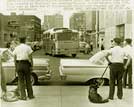 |
| A police dog attacking an African American man, as police break up crowd gathered outside court house, Jackson, Mississippi, for trial of sit-in Demonstrators. 1961 Library of Congress |