Bloody Sunday & the Voting Rights Act
In January 1965, Dr. Martin Luther King launches a voter registration effort in Selma, Alabama. There is much resistance among whites. Many protesters and people who attempt to register are arrested. The Selma sheriff, James Clark, arrests 165 teenagers in February and leads them on a forced march into the countryside. On March 7, 600 voting rights activists meet at the Edmund Pettus Bridge and set out for Montgomery. They are soon stopped by state troopers, who attack them with tear gas, nightsticks, and cattleprods. More than 50 people are injured — the day will be known as Bloody Sunday. The nation, horrified, watches the violence on television.
One week later, President Johnson goes on TV to announce that he is submitting a voting rights bill to Congress. On March 21, another march takes place. This time, it is a national event; people fly in from all across the country to participate. The march begins in Selma and ends with a rally at the Alabama state capitol in Montgomery, where Dr. King addresses the crowd of 50,000. Soon afterward, a white protester is killed by a group of Klansmen, who will later be convicted for the crime.
On August 6, after an unusually speedy congressional review, the president signs the Voting Rights Act into law, eliminating literacy requirements and other voter tests and allowing federal examiners to register black voters.
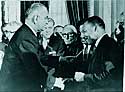 |
| President Lyndon B. Johnson gives Dr. Martin Luther King one of the Pens Used in the Signing of the Voting Rights Act of 1965, 1965 Library of Congress |