Stonewall
For the better part of the 20th century, police wage a campaign of harassment and terror against the queer community. As is often the case, this branch of the criminal justice system works to execute the will of the judiciary and medical establishment and to enforce social and political biases. Lesbians can be arrested if they are not wearing at least two pieces of "female" clothing. Entrapment is a favorite police tactic: Undercover cops encourage sexual advances from gay men and then arrest them. Relentless taunting and rape of those in custody are common occurrences.
The Stonewall Inn, a gay bar in Greenwich Village in New York City, is raided many times, and its patrons become only too familiar with police tactics. On Friday June 27, 1969, the police attempt to raid the bar again. This time, drag queens, dykes, and fags fight back, refusing to allow the police to enter the building. The unrest spreads into the streets and continues for two more nights, to the dismay of the police, who had become accustomed to quiet submission during raids.
A decade of civil rights activism has brought home the idea that all citizens are entitled to freedom and rights. The Stonewall Riots usher in a more militant, highly visible, gay liberation movement.
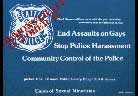 |
| Poster: Chief Hanson Will Not Meet with the Gay Community, So We Must Take Our Demands to Him — End Assaults on Gays. between 1965 and 1980 Library of Congress |