You Have the Right to Remain Silent — Miranda
In 1966, the Supreme Court decides one of its most controversial cases, Miranda v. Arizona, with only a five-vote majority. Miranda is actually four separate cases consolidated into a joint appeal, but it takes its name from the case of Ernesto Miranda, who had been accused of rape and kidnapping. Miranda and the other three suspects had been taken into custody and questioned in police-dominated environments — interrogation rooms — but none of them had been informed of their Fifth Amendment right not to incriminate themselves.
The Warren court concludes that the suspects' rights to due process were violated because they were coerced or forced into making statements that were later used against them in court. Aiming to level the playing field in the interrogation room, the court devises a five-point warning, giving fair notice of constitutional rights to criminal suspects. The court emphasizes that Congress and the states are free to come up with their own measures to achieve the same ends — as long as they are as effective as the ones identified in Miranda. As the years pass, many people will feel that the Miranda law changes, loses the strength of the original ruling. Nevertheless, it remains a hotly debated decision, with ardent admirers and equally passionate critics.
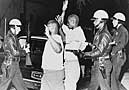 |
| Police March two Black Men from the Los Angeles Black Muslim Mosque after Weeklong Racial Uprising Had Been Declared Ended 1965 Library of Congress |