An Activist Court — The Warren Court
Earl Warren became Chief Justice in 1954 and presided over a Supreme Court known for using its judicial power to strengthen individual rights. A profoundly active court, it is responsible for interpretations of the Fourth, Fifth, Sixth, Eighth and 14th amendments that revolutionize criminal procedure by establishing uniform application across all jurisdictions. These many rulings touch on investigation, interrogation, trial procedure, and punishment.
The civil libertarian stance of the court evolves as more appointments are made, and during the 1960s, the Warren Court hands down a multitude of landmark rulings. The 1961 Mapp v. Ohio, 1963 Gideon v. Wainwright, and the 1966 Miranda v. Arizona cases are just a few of the decisions characteristic of this court's ideological philosophy. The emphasis is on strict procedural requirements that define and ensure individual rights. The court feels that it is better that a few of the guilty go free in order that individual rights be protected.
Warren retires at the age of 78 in 1969, and Warren E. Burger takes over his position as chief justice.
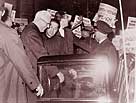 |
| Justice comes through smiling 1963 Library of Congress |