Community Corrections & Alternatives to Incarceration
Alternatives to incarceration spring up in response to the extreme overcrowding and budgetary crises threatening most prisons. Shock incarceration, or the boot-camp prison program, becomes popular. This strategy incorporates a concentrated military-type daily structure into a shorter overall sentence. It is believed to lower recidivism, especially among juvenile offenders, and cost less to administer. Jurisdictions decide who is eligible for this sentence and whether participation will be voluntary or mandatory.
Intensive supervisory probation, or ISP, is another alternative method. This program involves increased contact with a probation officer, sometimes five visits a week. It can include such requirements as curfew, employment, random drug testing, and community service. Many courts also begin to turn to the home confinement sentence, in which offenders are restricted to their residences (some are allowed to go to work during the day) and monitored by electronic equipment.
Combinations of penalties become popular, indicating the need for intermediate sanctions that are less severe than incarceration but harsher than probation. Such strategies indicate lawmakers' awareness that keeping someone in the community can have advantages, from cost savings to holding a family together, but the main purpose of these tactics is to stem the growth of the prison population. Surprisingly, however, the number of people under one sort of correctional supervision or another skyrockets. The prison population, which was two million at the start of the decade, reaches an astounding five million by the end.
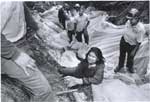 |
| Los Angeles Conservation Corp members sandbagging in the Hollywood Hills. The LACC is a community based environmental program that employs high school drop-outs, former gang members and parolees Donna DeCesare |