Crack-down
A new drug appears in the Bahamas in 1983. Crack is a purer form of cocaine — efficient, intense, and affordable — it's a cheap superhigh, and it's more addictive. Within two years, crack has made its way to Harlem in New York City. From there, it will spread across the nation. No agency can find the organization behind the industry. That's because there is no top dog, no hierarchy of power, no Colombians, no traffickers. This new drug industry is made up of small operations run by independent locals who each employ a few street sellers. Crack is sold blatantly out in the open, and people come from other neighborhoods to buy it. It appeals to the middle, upper, and lower classes.
At first, the DEA views crack as a local problem for the police. Then on June 19, 1986, Jack Lawn, the DEA chief, visits New York City to see for himself and is duly alarmed. That same day, college basketball star Len Bias dies of a cocaine overdose. (He wasn't using crack, although some news stories mistakenly report that he was.) Congressional hearings begin almost immediately, and revisions of existing drug laws are drafted, making them tougher and including especially stiff penalties for crack. For the first time, a significant percentage of addicts are women. In many communities, female-headed households are devastated. Black communities are being decimated, and they too advocate for harsh sanctions. The Anti-Drug Abuse Act of 1988 calls for a drug-free America in just seven years.
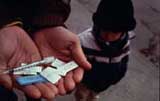 |
| Harlem Joseph Rodriguez, 1987 |