Innocence & the Death Penalty
On January 31, 2000, Governor George H. Ryan declares a moratorium on executions in Illinois, pending a thorough examination of procedures and practices. When investigations reveal that innocent people are sitting on death row, the Illinois governor takes another bold step, refusing to allow further death sentences to be carried out until the system can assure that only the guilty are punished. At least five other states mount similar investigations, although none has halted executions yet.
A number of programs are established across the nation to exonerate those who have been wrongfully convicted. The Innocence Project, founded in 1992 by Barry Scheck and Peter Neufeld at the Benjamin N. Cardozo School of Law, is perhaps the most famous of these. It concentrates its efforts on DNA testing, which is not readily available to prisoners. In addition to other factors, the Effective Death Penalty and Anti-Terrorism Bill signed by President Clinton in 1996 dramatically curtailed post-conviction measures and avenues for redress. Reopening a case or introducing new evidence is difficult, often impossible. As of early 2001, the Innocence Project has helped exonerate 63 death row inmates, 8 of them in 2000 alone.
It is difficult to discern whether there will be a resurgence of abolitionist activity. Many contemporary concerns about the death penalty focus on whether innocent people are being executed, not on whether the punishment should be used at all, even on the guilty. Still, there appears to be considerable momentum surrounding these issues. Change may be in the air.
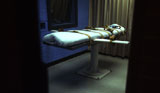 |
| Andrew Lichtenstein |