Criminals as Sinners
In the colonies, all crime is sin, and most sins are crimes. There is a strong belief in "original sin," the idea that the offense committed by Adam and Eve when they ate the fruit of the tree of knowledge was so great that banishment from Eden was not punishment enough — all of their descendants are condemned to inherit guilt and sinfulness at birth. Crime, therefore, is explained as the manifestation of the weakness of born sinners. Criminals are no different from anyone else, because everyone is equally capable of falling prey to temptation.
Because religion defines crime, a separate theory to explain criminality is not necessary. Acts such as theft and murder are understood the same way as idolatry, blasphemy, and witchcraft. Drinking on the Sabbath, flirting, and gossiping are criminal offenses. Children's unruliness, servants' laziness, and an array of sexual offenses are also part of the criminal code, since they could result in hardships for the community through disruption, lost labor, or the birth of illegitimate children. Records show that most colonial crimes would not be considered serious or particularly criminal by the 20th century. Fornication, lewd behavior, bastardy, neglect of duty, drunkenness, petty theft, contempt of authority, and Lord's day violations top the list as the most prosecuted crimes.
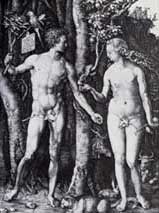 |
| "Original Sin" by Albrecht Durer, 1504 |