The Courts as Public Theater
The individual colonies develop independently from one another. For each, the court serves an important role, functioning as the governing body. The county court is the basic forum for handling criminal and administrative issues. There will eventually be higher courts that hear appeals and, in larger towns and cities, specialized courts.
Much of the language is the same as in the English system — "jury," "felony," "judge," "arrest," and "defendant" are all part of the colonial vernacular. But the judicial procedures are much simpler than the complicated (even convoluted) English legal practices. A magistrate, or justice of the peace, controls the proceedings. These men tend to be religious and political leaders, their authority granted by God, so the jury is less powerful. The trial is public theater, a ritualized ceremony, in which rules are reinforced and justice is administered. Since there are no lawyers, the process tends to be quick. The goal is for the criminal — or sinner — to be humbled by the trial and subsequent punishment, to repent, and then to return to the welcoming arms of the community.
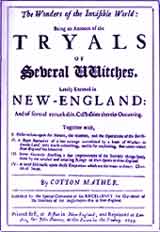 |
| Title page from Cotton Mather's witch hunting pamphlet, 1693. |