The Death Penalty: A Different Approach
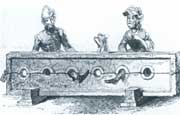
The death penalty is used far less often in the New World than in England, where it is said that there are more than 300 capital crimes. This may be due to a labor shortageperhaps no able-bodied person is expendable in the colonies. For first and second offenses, a corporal punishment and fine often suffice; only the third infraction results in death. In some instances, despite a personıs obvious guilt, colonial juries refuse to convict if the penalty will be death. When capital punishment is implemented, the method tends to be hanging. In the South, the death penalty is invoked more frequently, primarily for slaves. The black population suffers different, more severe, punishments in the North as well.
In 1682, the Quaker William Penn, leader of the Pennsylvania Colony, enacts the Great Law, which restricts the death penalty to homicide and replaces corporal punishments with imprisonment, hard labor, and fines. In the long run, though, Pennıs fellow colonists are not ready to embrace such drastic reforms. Just one day after his death in 1718, the law is replaced by the English Anglican Code, which reinstates harsh corporal punishments and adds witchcraft to the list of capital crimes.
 |
| caption |