Crime as Social Problem
Colonial Americans viewed crime as a sin and dealt with it as a moral problem. In the new republic, this is not the case. Many of the informal mechanisms for social control, such as the family and the church, become less effective in the rapidly changing social landscape. As demographics shift and the population in urban areas increases, so do property and violent crimes. Fear and concern about crime rises, alongside a brewing sense of lawlessness.
Crime was once considered an inevitable product of original sin. Now it is understood as a social problem, the behavior of rational men who gain more than they lose by acting criminally. This theoretical approach, developed and advanced by the classical school, transforms strategies for punishment and crime prevention. The law in England was complicated and obtuse, and its punishments were extreme. In the colonies, law was inconsistent, and punishment was random and severe. Now it is believed that law and penal codes must be simple, clear, standardized, and written down, so that people know what is unacceptable and can conform to legal expectations.
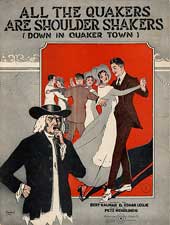 |
| Musical Poster, 1887 |