Disorder in the City: Gangs & Vice
By the 1830s ethnic and religious gangs like the Plug Uglies, Forty Thieves, and Slaughterhouse Boys, contributing to serious disorder. Most gangs are politically affiliated and provide muscle for election stealing, political manipulation, and general mayhem. Elections become a time of street violence; riots are not uncommon. There is also tremendous tension between Catholics and Protestants. This era marks the beginning of the first wave of organized crime syndicates. Men in groups, often protected by politicians, carouse and carry on unpoliced. As long as the trouble is restricted to the poorer neighborhoods, it is ignored by those in power. Crime becomes associated with the lower and immigrant classes because it is in these communities that an array of venues for illegal behavior blossom. Not that people from all classes aren't engaged in similar activities — often the wealthy have more discreet avenues to pursue these same behaviors, or they simply travel outside their own communities. Taverns proliferate; alcohol consumption and public drunkenness is increasingly problematic. Houses of ill repute are easy to find, and opportunities to gamble abound.
By 1860, 30 percent of the country's population are urban dwellers. City housing is in short supply, and the urban infrastructure is ill-equipped for this deluge. This period is accompanied by a profound fear of growing social disorder.
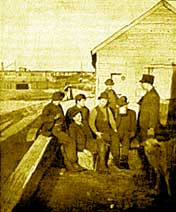 |
| A Growler Gang in Session Jacob Riis, 1890 |