The Dred Scott Decision
During the 1830s, Dred Scott, a slave, accompanies his master to the free part of the Louisiana Territory and spends several years serving him there before returning to Missouri. Upon the death of his master, Scott sues for his freedom, arguing that his time in the free territory had released him from bondage.
The case, Dred Scott v. John F. A. Sanford, makes its way to the Supreme Court, which hands down its ruling in 1857. This landmark decision goes even beyond denying Scott his freedom. The justices state that, on a far more basic legal and constitutional level, blacks do not have the right to sue in federal court. They declare that blacks, whether freed or enslaved, are not citizens and have none of the rights afforded by that status‹in other words, they possess no rights that whites are legally bound to respect. The decision also nullifies the Missouri Comprise of 1820, which prohibited slavery in the Louisiana Purchase territory north of the 36th parallel.
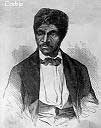 |
| Portrait of Dred Scott |