Call Boxes & Fingerprinting
A number of innovations, often using advances in technology, begin to organize, streamline, and maximize law enforcement's potential to identify and apprehend offenders. They also lead the way to a greater consolidation of power and a fortification of resources.
In 1893, the International Association of Chiefs of Police is formed. Its first order of business is to construct a nationwide clearinghouse for criminal identification. Until now, a sure-fire way to avoid prosecution has been to flee the state where the crime was committed because there was little or no communication between local governments about such matters. No longer.
Teddy Roosevelt, the New York City police commissioner from 1895 to 1897, advocates the use of call boxes, a system of telephones throughout the city that allow citizens to report crime and receive prompt assistance. This greatly aids police in pursuing suspects and improves their relationship with the public. At the 1904 St. Louis World Fair, a Scotland Yard detective demonstrates fingerprinting. St. Louis then becomes the first jurisdiction in America with a fingerprinting bureau
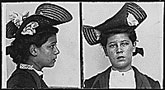 |
| Lizzie, Ft. Leavenworth, 1906 Library of Congress |