"White Slavery" & Prostitution
Having focused on alcohol, drugs, and gambling, the moral campaign now turns its sights to sex. These reformers staunchly believe that women who live immorally, in particular as prostitutes, are enslaved. A commission is set up in 1907 to examine immigration's role in vice and crime, and its report confirms popular Anglo beliefs that sexual depravity is coming from outside U.S. borders.
There are other statutes dealing with the importation of women for prostitution, but the Mann Act of 1910‹the "White Slave Traffic Act"‹does most to expand the scope of the law's interest in sexual activities. The broadness of its language‹terms like "immoral purpose" and "debauchery"‹allows for liberal judicial interpretation and enforcement. The act conforms to the precepts advanced by the moral crusaders. Not only do they claim that indecency is leaking in through the borders, but that innocent white young women are being tricked into a life of wickedness. Accordingly, the Mann Act targets people who shelter prostitutes and criminalizes interstate traffic of women for "immoral purposes."
The sexist and racist tone of the Mann Act is evident in its application as well as its composition. At a time when women are starting to become more independent, the law doesn't limit itself to prostitution; it targets nonmarital sex, too. It is also used against interracial couples, especially when the man is of color and the woman white. The actor Charlie Chaplin and musician Chuck Berry will later be convicted under this act. It will not be overturned until 1986.
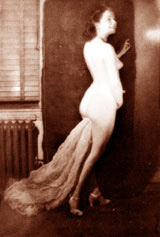 |
| Prostitute's Calling Card, c. 1920-1930 Evidence from the Lucky Luciano Trial Courtesy of City of New York Municipal Archives |