Prison Labor & the Prison Industrial Revolution
The inclusion of work in correctional institutions gradually evolves into a substantive industry. Putting inmates to work satisfies the era's rehabilitative philosophy, although the primary drive behind the trend is productivity and profits. Prison labor is used to manufacture goods for private, military, and state use, and the economic returns are considerable.
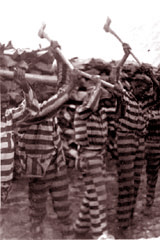
The various American penal institutions put their prisoners to work in different ways. The Convict Lease System, developed in the South after the Civil War, is still in use. Inmates are leased to private contractors, who are then responsible for transportation, supervision, discipline, and all other custodial concerns. Agricultural and mining concerns often employ this method. In the Contract System, private businesses create industries inside the prisons, providing the raw materials and contracting the inmates' labor from the state. The Piece-Price System allows private businesses to provide the raw materials from which inmates manufacture goods. The institution is then paid according to the total number of pieces produced. For the Public Account System, inmates manufacture commodities‹such as license plates, desks, lockers, or uniforms‹for the state to sell. Inmates under the Public Works and Ways System, labor outside the prison on construction, repair, and maintenance of public roads, highways, and buildings.
Though the differences between the various systems are not insignificant, the result is the same. Inmate labor is exploited for profit. It will take a powerful and organized labor movement to challenge this system.
 |
| Street Arabs Jacob Riis, c.1880 |