Drunk Driving
Though the automobile made its debut in the first decade of the 20th century, Americans don't really embrace the car until the 1940s. So traffic law, composed of a variety of offenses and often punished with a fine, comes of age during this era. These laws are more nonchalant than most others, probably because of the class of people associated with traffic violations. Drunk driving provides an example of this. In 1910, New York made driving while intoxicated a misdemeanor on the first offense and a felony on the second. Evidence regarding alcohol amounts in a defendant's body determined by analysis of breath, urine, blood, or saliva were deemed admissible in court in 1941, and the "blood alcohol concentration" level at which a person may be considered intoxicated is established.
An "implied consent" law is enacted in New York in 1953. It states that licensed drivers, simply by holding licenses, have given police permission to perform chemical tests to determine whether they're drunk. Driving under the influence is now a significant offense. But most of the people arrested under this law are from the middle or upper classes. Prosecutors, jurors, judges, and even the police tend to view this population more sympathetically than the offenders generally caught up in the criminal justice system. For its part, the public doesn't see the crime as a significant social problem.
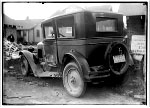 |
| View of Automobile Theodor Horydczak, 1890-1971 Library of Congress |